

2026 F1 Technology: Energy Harvesting and Deployment Evolution for Future Racing
Ferrari Media Centre
Courtesy of Pirelli
Courtesy of Pirelli
Analyzing F1 2026 energy harvesting and deployment through China GP telemetry, and the resulting technological implications for future automotive innovation.
ROME, ITALY, March 24, 2026 /EINPresswire.com/ -- The 2026 Formula 1 season represents the most radical paradigm shift in the history of open-wheel racing. With the introduction of the new Power Unit regulations, the sport has effectively become a high-speed laboratory for the Future of Automotive propulsion. As the teams gathered at the Shanghai International Circuit for the Sprint Qualifying session, the telemetry data provided a clinical look at the immense challenges posed by the new 50/50 power distribution between internal combustion and electric energy.The Engineering Challenge: Energy Harvesting Without MGU-H
The 2026 technical regulations have mandated the removal of the Motor Generator Unit-Heat (MGU-H), a component that previously allowed for nearly continuous energy recovery from exhaust gases. In this new era, the burden of electrical generation falls entirely upon the Motor Generator Unit-Kinetic (MGU-K). While the MGU-K's output has been increased from 120kW to a staggering 350kW, the reliance on kinetic recovery during braking phases has introduced a new layer of strategic complexity.
Engineers must now find ways to harvest up to 8.5 MJ of energy per lap solely through braking—a massive increase from the 2 MJ seen in previous years. This requirement places extreme stress on the braking systems and demands sophisticated energy maps to ensure the battery remains within its optimal thermal window.
Deployment Logic and the "Manual Override Mode"
One of the most talked-about innovations for the 2026 season is the "Manual Override Mode," designed to aid overtaking. This system allows a following car to utilize a higher rate of deployment even as the car ahead reaches its energy limit. However, as the Shanghai telemetry shows, the ability to actually deploy this energy is heavily dependent on the efficiency of the initial harvesting.
"What we are seeing on the long straights of Shanghai is a phenomenon known as 'derating'," explains Mirko Borghesi, Director of F1-News.eu. "When a driver like Lewis Hamilton reports a lack of power, he is often experiencing the car’s software cutting off electrical deployment to protect the battery’s state of charge. In the 2026 era, managing the 'clipping' at the end of the straight is as vital as the initial acceleration."
Case Study: Shanghai Telemetry Analysis
The speed trap data from the China Sprint Qualifying serves as the primary evidence for these technical diverging paths. Isack Hadjar, driving for Oracle Red Bull Racing under the strategic leadership of Team Principal Laurent Mekies, reached a peak velocity of 341 km/h. This suggests a highly efficient aerodynamic package combined with an energy deployment strategy that sustains the 350kW boost for the duration of the 1.2km back straight.
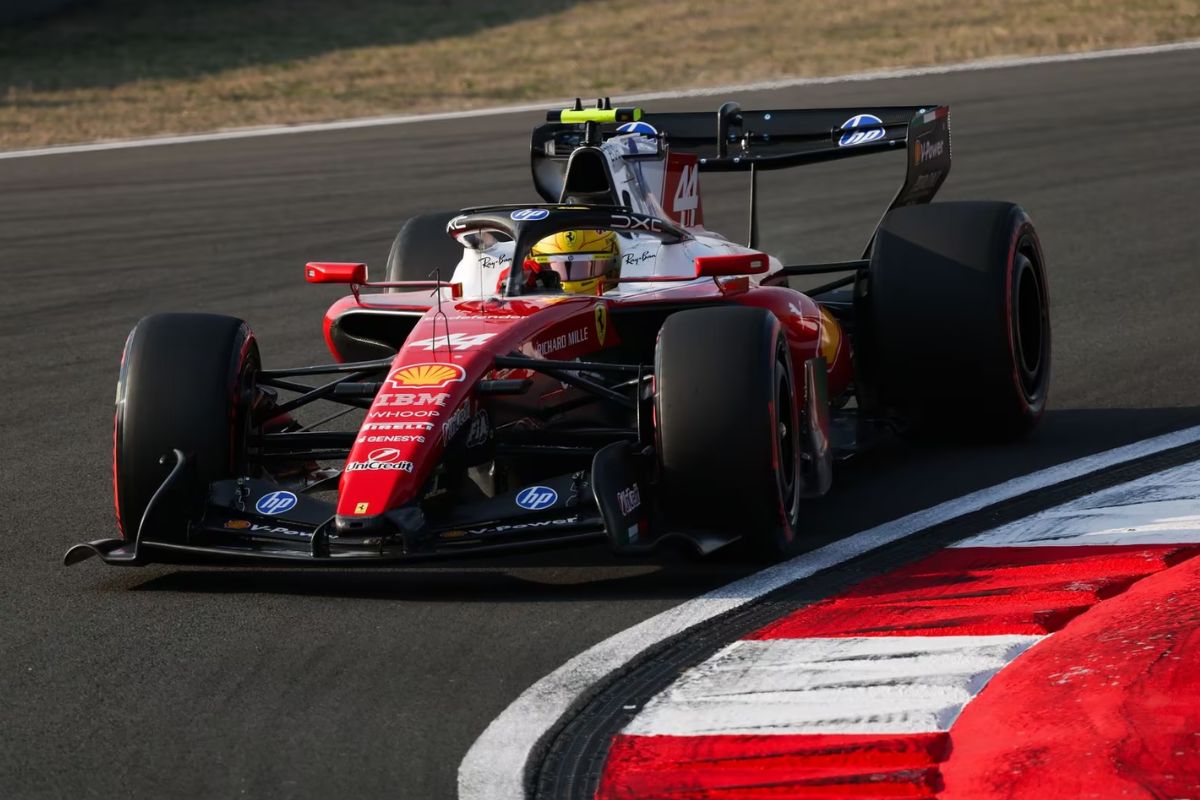
In stark contrast, the Scuderia Ferrari HP of Lewis Hamilton peaked at 330 km/h, while Charles Leclerc struggled further back at 324 km/h. This 11-17 km/h delta is not merely a result of internal combustion performance but is a direct consequence of how the Energy Recovery System (ERS) is calibrated. If the Ferrari SF-26 is forced to harvest more aggressively to maintain battery levels, it inevitably sacrifices top-end deployment, leading to the "missing power" sensation reported by the drivers.
The Impact of "Active Aero" on Deployment
The 2026 regulations also introduce active aerodynamics (X-mode and Z-mode) to reduce drag on the straights. The interaction between these movable wings and the electric deployment is the new frontier of performance. A car that can minimize drag more effectively can sustain its electric boost longer before hitting the energy deployment ceiling. The telemetry suggests that the Red Bull package has found a superior harmony between its aero-elasticity and its harvesting cycles, allowing Hadjar to outpace the field significantly.
From the Paddock to the Road: Future Implications
The research being conducted by teams in Shanghai has direct implications for the next generation of road-going vehicles. The development of high-density battery cells capable of discharging and recharging at unprecedented rates is the "holy grail" of the electric vehicle industry. Furthermore, the power electronics required to manage 350kW of instantaneous deployment are being miniaturized and optimized in the F1 paddock before they ever reach a production line.
"Formula 1 has returned to its roots as a pure technical challenge," continues Mirko Borghesi. "The 2026 Power Units are more than just engines; they are intelligent energy management systems. The performance gap we see today between a leader like Hadjar and a legend like Hamilton is a testament to the steep learning curve associated with these new technologies."
Conclusion: The Mastery of Energy
As the 2026 season progresses, the championship will not be won simply by the driver with the heaviest right foot, but by the team that masters the art of harvesting. The data from Shanghai confirms that the mastery of energy recovery and the strategic use of deployment are now the defining metrics of success. Ferrari and other manufacturers must now look deep into their software algorithms to bridge the gap and unlock the latent potential of their 2026 Power Units.
For a detailed sector-by-sector breakdown of the Calendar F1, exclusive driver interviews, ferrari f1 news, and in-depth technical reports on the 2026 regulations, visit the official portal at www.f1-news.eu.
Mirko Borghesi
F1-News.eu
mborghesi@f1-news.eu
Visit us on social media:
Instagram
Facebook
YouTube
TikTok
X
Other
Legal Disclaimer:
EIN Presswire provides this news content "as is" without warranty of any kind. We do not accept any responsibility or liability for the accuracy, content, images, videos, licenses, completeness, legality, or reliability of the information contained in this article. If you have any complaints or copyright issues related to this article, kindly contact the author above.
